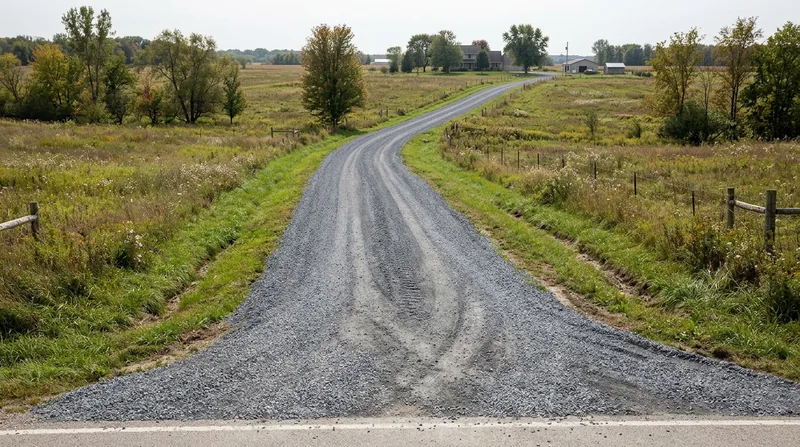




Gravel driveways in the rural and semi-rural stretches of Milwaukee County, Dodge County, and Sheboygan County face a single dominant problem: the heavy lake-plain clay underneath them holds water like a basin. When spring thaw comes or a heavy rain soaks the ground, that clay swells, and when water pools on the surface instead of running off, the whole drive softens from underneath. Gravel driveway installation and grading in Milwaukee means building a crowned, pitched surface so water sheds to the edges and into proper drainage, not into the clay. We grade the subgrade, add compacted stone in the right thickness, and pitch the surface so every drop runs off before it can soak in. That work, done right, keeps a gravel drive passable for years instead of letting it turn into a mud trap by mid-spring.
Why Gravel Driveway Installation and Grading Matters in Milwaukee's Clay Country
The clay subgrade under most driveways in Greater Milwaukee is the same material that has caused asphalt drives to fail for decades. It swells when wet, shrinks when dry, and heaves under freeze-thaw cycles that run from November through April. A gravel drive sitting on that clay without proper grading and drainage becomes a seasonal liability. Water pools in low spots, the clay softens, ruts form, and by April you are looking at a drive that needs complete reconstruction instead of just maintenance. The solution is not to pour more gravel into a flat drive, but to establish proper crown and pitch from the start so water never sits on the surface long enough to penetrate.
- We establish a crowned profile so the center of the drive is higher than the edges, forcing water to drain laterally.
- We compact the subgrade and add a base layer of larger stone that allows water to move through it and away from the clay.
- We finish with smaller crushed stone that provides a stable, drivable surface while still allowing drainage.
- We pitch the drive along its length so water also runs toward the road or toward proper drainage areas, never pooling in the middle.
- We verify that drainage patterns do not create erosion or flooding on neighboring properties or in local right-of-way areas.
Without this grading and drainage work, a gravel drive becomes maintenance-heavy and short-lived, especially in the freeze-thaw climate that dominates Milwaukee winters.
Key info: Milwaukee's clay subgrade is the reason gravel driveways fail. A flat, ungraded gravel surface will absorb water through the top layer and into the clay below, where it swells and heaves. Proper crown and pitch are not optional; they are the foundation of a gravel drive that survives the spring thaw without rutting or washing away.
For more context on how base preparation affects driveway performance, see our page on asphalt driveway paving in Milwaukee, where the same clay-handling principles apply.
How We Grade and Install Gravel Driveways in the Milwaukee Area
Gravel driveway installation starts with understanding the site: slope, drainage direction, soil composition, and whether the existing drive can be regraded or must be stripped and rebuilt. We do not simply dump gravel and level it. We establish the crown and pitch first, then build the layers underneath so water moves through them and away from the clay, not into it.
- We inspect the site and measure the existing slope and any drainage patterns to understand where water currently goes and where it pools.
- We strip away failed gravel and soft topsoil down to stable subgrade, or work with the existing subgrade if it is sound.
- We establish the crown profile, typically 2 to 3 inches of rise from the center to the edges over the width of the drive, and pitch the length toward a drainage outlet.
- We add a base layer of larger crushed stone (typically 3 to 4 inches) that compacts and allows water to percolate through it rather than pooling on top.
- We add a top layer of smaller, more stable crushed stone or gravel (typically 2 to 3 inches) that provides the drivable surface.
- We compact each layer with a roller so the stone locks together and resists rutting and washboard under vehicle traffic.
- We verify the pitch and crown are correct before we consider the job complete.
The result is a gravel drive that sheds water instead of absorbing it, and that resists rutting and washboard because the layers are compacted and properly pitched.
Example: A rural property near Waukesha with a 200-foot gravel drive that had become a mud pit every spring. The existing drive was flat and had no crown. We stripped it, established a 2.5-inch crown and a gentle pitch toward the road, added 4 inches of 1.5-inch crushed stone as base, and finished with 2.5 inches of smaller gravel. The drive now sheds water immediately, and the owner has had no spring washout in two seasons.
For properties considering the upgrade from gravel to asphalt, see our page on asphalt paving in Milwaukee, where the same grading and base principles apply but the surface is permanent.
Gravel Driveway Installation Methods and Materials
| Approach | Description | Best for |
|---|---|---|
| New crowned gravel drive from subgrade | Strip to stable subgrade, establish crown and pitch, add compacted base and top layers of crushed stone. | Properties with failed or non-existent gravel drives, or where the existing base is too soft or poorly pitched. |
| Regrading and overlay on existing gravel | Work with the existing base if it is sound, reestablish crown and pitch, add new top layer of gravel and compact. | Drives that have lost crown and pitch but have a stable base underneath; lower cost than full replacement. |
| Grading and drainage correction | Regrade the existing drive to establish proper crown and pitch, add drainage swales or culverts if needed to redirect water. | Drives where pooling is the main problem and the subgrade and base are otherwise sound. |
| Recycled asphalt millings gravel drive | Use compacted recycled asphalt as the top layer instead of virgin crushed stone; binds and compacts over time for a more stable surface. | Budget-conscious homeowners in areas where recycled asphalt is available; provides a firmer surface than pure gravel. |
Gravel Driveway Installation and Grading Cost in Milwaukee: What to Expect
A basic gravel driveway installation with proper grading and crown starts at around $950 for a small residential drive, typically 200 to 250 feet long and 10 to 12 feet wide. The actual cost depends on several factors: the length and width of the drive, the condition of the existing subgrade and whether it needs to be stripped or reworked, the distance to the site and access for equipment, and whether drainage work or culvert installation is needed. A 400-foot rural drive that requires full subgrade preparation and a new base layer will cost significantly more than a 200-foot regrading job on an existing gravel surface. We provide written estimates that include tonnage specifications and materials, so you know exactly what you are paying for.
The cost difference between regrading an existing drive and building a new crowned drive from subgrade is substantial. If the subgrade is sound and you only need to reestablish crown and add a new top layer, the cost is lower. If the drive needs to be stripped and rebuilt with new base and top layers, the cost is higher. We measure the site and provide a detailed estimate before any work begins. See our pricing page for a full breakdown of service costs and what affects them.
Why get multiple estimates: gravel driveway pricing varies because the subgrade condition and drainage needs are different on every property. A contractor who quotes a flat per-foot price without seeing the site is guessing. We visit the property, assess the slope and drainage, measure the drive, and provide a tonnage and materials specification so you can compare apples to apples with other contractors.
What to Look for When Hiring a Gravel Driveway Contractor Near Milwaukee
Hiring a gravel or driveway contractor in the Milwaukee area means checking three things: whether the contractor is fully insured, whether you receive a written estimate with materials and tonnage specified, and whether the contractor can explain the grading and drainage strategy for your specific property. Do not hire based on price alone, and do not accept an estimate that does not include a site visit and a written specification of what materials go down and in what thickness.
- Ask for proof of insurance and confirm the contractor carries general liability and vehicle coverage.
- Request a written estimate that includes the length and width of the drive, the tonnage and type of stone for each layer, the compaction method, and the total price.
- Ask the contractor to explain how the crown and pitch will be established and why it matters for your specific site.
- Check references from at least two recent gravel driveway jobs in the Milwaukee area and ask whether the drive has remained stable through a full winter and spring thaw.
- Verify with your municipality whether a permit is required for the work; in some Milwaukee-area jurisdictions, grading and drainage work may require a permit, especially if the drive is near a property line or affects stormwater runoff.
- If your property is in an HOA or a master-planned community, check the architectural guidelines to confirm that a gravel drive is permitted; some communities restrict surface materials.
A contractor who is local, carries insurance, provides a written specification, and can explain the site-specific grading strategy is far more likely to deliver a drive that lasts than one who quotes a price over the phone and shows up with a truck full of gravel.
When you are ready to get started, contact us for a free estimate. We visit the site, assess the grading and drainage needs, and provide a detailed written specification before any work begins. Call (414) 982-3074 or use our contact form to schedule a time.
Gravel Driveway Installation & Grading in Milwaukee: Pricing Guide
| Service | Price | Details |
|---|---|---|
| Small residential gravel drive (200-250 feet) | Starting at $950 | Includes grading, crown and pitch establishment, compacted base and top layers, site cleanup |
| Medium rural drive (300-400 feet) with regrading | Starting at $1,400 | Regrade existing subgrade, establish crown and pitch, add new compacted base and top stone layers |
| Full subgrade replacement with drainage | Starting at $1,800 | Strip failed gravel and soft subgrade, recompact or replace, establish crown, add base and top layers, drainage swales if needed |
| Recycled asphalt millings gravel drive | Starting at $1,100 | Grading and compaction with recycled asphalt top layer instead of virgin stone, provides firmer surface over time |
| Travel and site visit | Included | No separate mileage or call-out fee within Milwaukee and surrounding service areas |
| Written estimate | Free | Includes site assessment, materials specification, tonnage breakdown, and total price with no obligation to book |
Indicative pricing, the exact cost depends on square footage, finish, and site access. Free personalized estimate within 24h at (414) 982-3074.


