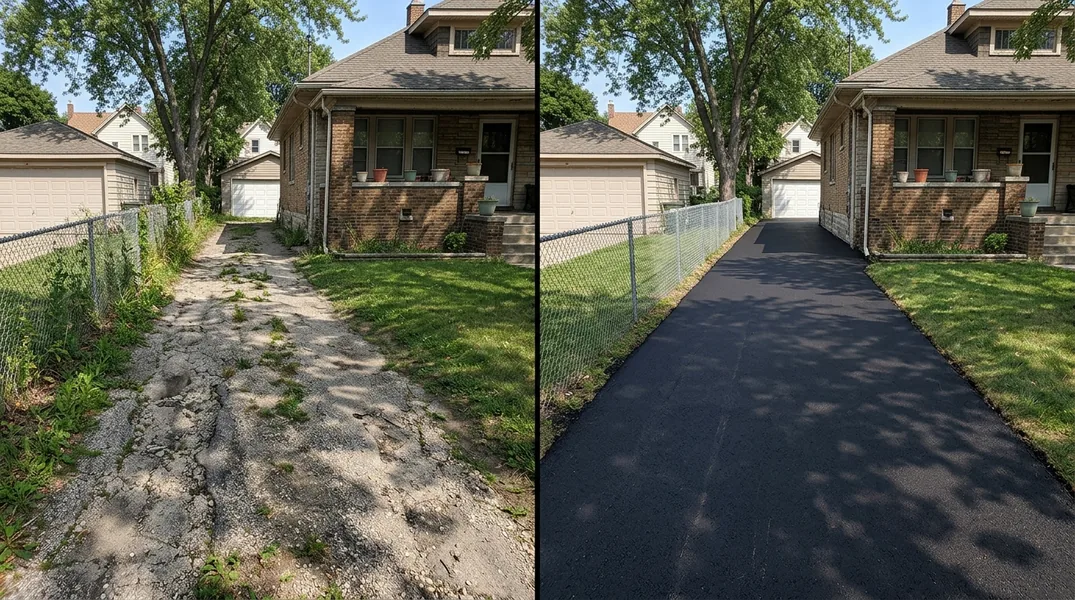
Understanding Milwaukee's Unique Soil Challenges
If you're a homeowner in Milwaukee, you've probably noticed that our region sits on heavy clay soil. This geological reality shapes everything about how driveways perform here, which is why choosing the right driveway material isn't just about aesthetics or upfront cost. It's about understanding how your chosen surface will interact with the freeze-thaw cycles, moisture retention, and ground movement that come with Wisconsin winters and our dense, moisture-holding clay base.
Clay soil expands when wet and contracts when dry, creating constant stress on whatever sits on top of it. During our brutal winters, water trapped in clay freezes and thaws repeatedly, which can cause heaving and settling that damages poorly chosen driveway materials. This is precisely why some driveway options that work beautifully in drier climates can fail quickly here in Milwaukee. Before you commit thousands of dollars to a new driveway, it's essential to understand how asphalt, concrete, and tar & chip each respond to our local conditions.
Asphalt vs. Concrete: The Head-to-Head Comparison
When homeowners ask about asphalt vs concrete driveway options, they're usually weighing initial cost against long-term durability. Asphalt typically costs 40 to 60 percent less upfront than concrete, which makes it attractive to budget-conscious homeowners. However, the real story is more nuanced when you factor in Milwaukee's climate and soil conditions. Asphalt Driveway Paving & Installation creates a flexible surface that can expand and contract with temperature changes, which is a genuine advantage over rigid concrete in freeze-thaw environments.
Concrete, by contrast, is rigid and doesn't flex as the ground beneath it moves. In Wauwatosa and surrounding areas where clay soil movement is pronounced, concrete driveways often develop cracks within five to ten years. These cracks allow water infiltration, which accelerates deterioration. While concrete can last 25 to 30 years in ideal conditions, Milwaukee's clay soil and winter weather often reduce that lifespan significantly. Asphalt's flexibility means it accommodates ground movement better, though it does require more frequent maintenance than concrete to reach its full potential lifespan.
Another consideration is surface temperature. Asphalt absorbs heat and can become uncomfortably hot in summer, while concrete stays cooler. However, that heat absorption actually helps asphalt shed snow and ice more quickly in spring, which is a practical advantage during Wisconsin winters. Concrete's cool surface can be slippery when wet and takes longer to clear of ice naturally.
The Asphalt Driveway Lifespan Question: What You Really Get
Understanding asphalt driveway lifespan requires separating myth from reality. Many homeowners believe asphalt driveways only last 5 to 10 years, but that's a misunderstanding of what happens without proper maintenance. A neglected asphalt driveway will indeed deteriorate quickly, but an asphalt driveway that receives regular care can last 15 to 20 years or longer. The key is understanding that asphalt requires proactive maintenance, not reactive repairs after problems develop.
In Milwaukee's climate, the most critical maintenance tasks are seal coating every two to three years and addressing cracks promptly. Seal coating protects asphalt from UV rays and water penetration, which are the primary culprits in premature aging. Pothole Repair & Asphalt Patching should be done immediately when damage appears, because small issues expand rapidly once water gets underneath the surface. When homeowners invest in these maintenance tasks, their asphalt driveways perform reliably through multiple Wisconsin winters.
If your existing driveway is showing significant wear but still has structural integrity, Asphalt Resurfacing & Overlay can extend its life another 10 to 15 years at a fraction of the cost of complete replacement. This option is particularly cost-effective for homeowners dealing with aging blacktop driveways that have lost surface quality but haven't failed structurally.
Can You Pour Asphalt Over Concrete? The Overlay Option
A common question is whether you can install asphalt over concrete driveway surfaces. The short answer is yes, but with important caveats. If your existing concrete is relatively flat, well-drained, and free of significant cracks, asphalt overlay is a viable option that costs less than removing the concrete and starting fresh. The asphalt bonds to the concrete base, creating a new wearing surface while preserving the structural foundation beneath.
However, this approach works best when the underlying concrete is stable. If your concrete is severely cracked, heaving, or settling due to clay soil movement, simply laying asphalt on top will only delay the inevitable. The asphalt will eventually crack and fail in the same places the concrete underneath is damaged. In Brookfield and throughout the Milwaukee area, where clay soil movement is common, we often recommend complete removal and proper asphalt installation rather than overlay when the concrete base is compromised.
The advantage of asphalt overlay is cost and convenience. You avoid the expense and mess of concrete removal, and you get a fresh, dark surface that sheds water effectively. The disadvantage is that you're essentially postponing rather than solving underlying foundation problems. Before committing to an overlay, have a professional inspect your concrete to assess whether it's a good candidate.
Tar & Chip Driveways: The Budget Alternative and Its Limitations
Tar & chip (also called chip seal) driveways have gained popularity as a budget-friendly alternative to asphalt and concrete. This surface consists of a tar or bitumen binder sprayed onto gravel and stone chips, creating a rustic appearance reminiscent of country roads. The appeal is obvious: tar & chip costs significantly less than asphalt or concrete, typically 30 to 50 percent cheaper than traditional asphalt.
However, tar & chip has serious limitations in Milwaukee's climate. The surface is loose and prone to displacement, especially in high-traffic areas and during harsh winters. Snow plowing can tear up the surface, and the tar binder becomes brittle in cold Wisconsin winters. Loose stones migrate across your driveway and onto neighboring properties, creating maintenance headaches and potential liability issues. Additionally, tar & chip requires resealing every two to three years to remain functional, which can eventually cost as much as or more than asphalt maintenance.
For residential driveways in West Allis and other Milwaukee suburbs, tar & chip is rarely the best choice. While it might work for light-traffic seasonal driveways in milder climates, our region's winter severity, clay soil movement, and typical residential traffic patterns make asphalt or concrete more practical long-term investments.
Making Your Choice: Asphalt Driveway Paving & Installation Cost in Milwaukee
When evaluating driveway options, cost matters, but it should include total cost of ownership, not just initial installation. Asphalt typically costs $3 to $6 per square foot for quality installation, concrete runs $8 to $15 per square foot, and tar & chip starts around $1.50 to $3 per square foot. However, these numbers tell only part of the story. Over a 20-year period, the total cost including maintenance often favors asphalt for Milwaukee homeowners, provided you commit to regular seal coating and crack repair.
The best approach is to get a professional assessment of your specific site conditions. Soil composition, drainage, slope, and existing surface conditions all affect which material will perform best and provide the best value. Milwaukee Asphalt Paving can evaluate your property and provide a transparent pricing comparison based on your actual circumstances. Every driveway is unique, and what makes sense for your neighbor might not be optimal for your property.
If you're ready to explore your options, contact Milwaukee Asphalt Paving at (414) 982-3074 or request a free estimate. Our team has installed and maintained thousands of driveways throughout Milwaukee, and we understand exactly how local soil and climate conditions affect long-term performance. We'll help you choose the material that delivers the best combination of durability, functionality, and value for your specific situation.
Looking for a professional asphalt paving contractor in Milwaukee? Milwaukee Asphalt Paving responds fast for all your asphalt paving needs.
Get a Free Quote