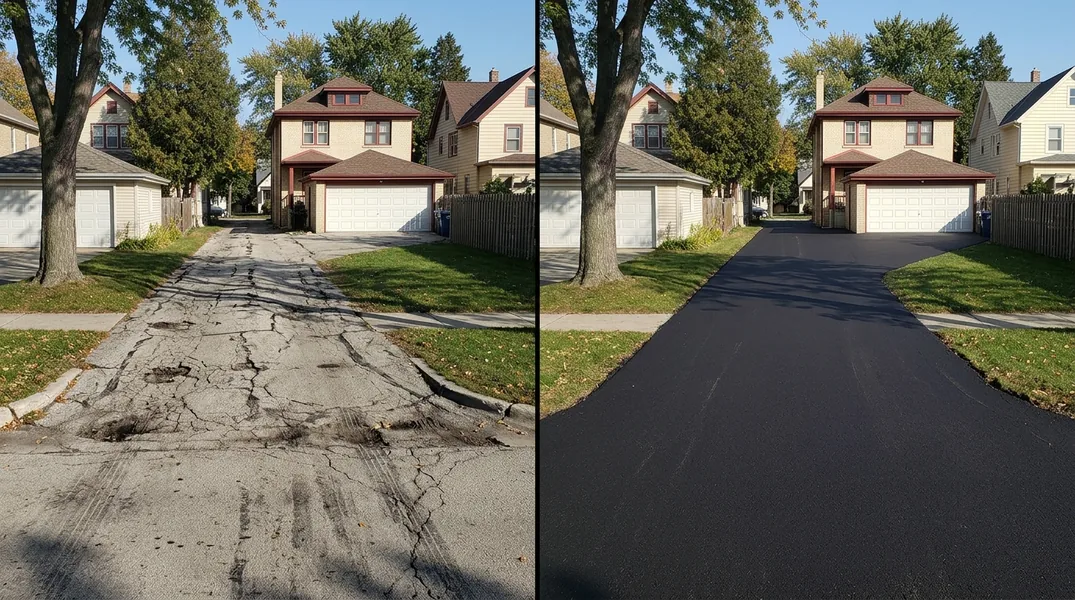
Understanding Freeze-Thaw Damage in Milwaukee Winters
Every winter, Milwaukee homeowners face a recurring problem that damages driveways from the inside out. The freeze-thaw cycle is a natural process that occurs when temperatures fluctuate above and below freezing, and it's one of the most destructive forces your asphalt will encounter. Water seeps into tiny cracks in your driveway, expands as it freezes, and then contracts as it thaws. This constant expansion and contraction weakens the structural integrity of your asphalt layer by layer.
The problem is particularly severe in Milwaukee because our winters are long and our temperatures swing dramatically. A warm day in March might reach 45 degrees Fahrenheit, melting snow and allowing water to penetrate your driveway. That same night, temperatures might drop to 20 degrees, freezing that water solid and exerting tremendous pressure on the asphalt. Over the course of a single winter season, this cycle can repeat dozens of times, causing cumulative damage that becomes visible by spring.
What Is Frost Heave and Why It Matters for Your Driveway
Frost heave is a related but distinct phenomenon that affects the soil beneath your driveway. When moisture in the ground freezes, it expands upward, literally lifting the soil and everything sitting on top of it. This is why you might notice your driveway developing humps, uneven sections, or areas that seem to have risen several inches higher than surrounding pavement. Frost heave doesn't just create an unsightly surface; it causes serious structural problems that can lead to cracking, buckling, and accelerated deterioration.
The damage from frost heave can be particularly frustrating because it often happens gradually, and homeowners don't realize the extent of the problem until spring arrives. By then, the heaved sections have settled unevenly, creating stress points where new cracks develop. These cracks then allow more water infiltration, starting the freeze-thaw cycle all over again. This is why addressing frost heave early, before it causes major structural failure, is so important for preserving your driveway's lifespan.
Signs Your Milwaukee Driveway Is Suffering Winter Damage
Recognizing the early warning signs of freeze-thaw and frost heave damage can save you thousands of dollars in repairs. Look for spider web patterns of small cracks appearing across your driveway surface, especially as temperatures warm in spring. These cracks might seem minor at first, but they're gateways for water infiltration that will worsen with each subsequent freeze. You might also notice potholes appearing, which form when the asphalt surface breaks apart and pieces are displaced by traffic.
Another telltale sign is uneven surfaces or sections of your driveway that have shifted upward. If you run your hand across your driveway and feel significant height differences between sections, frost heave is likely at work. Alligatoring (a pattern of interconnected cracks resembling alligator skin) is also common in driveways that have endured multiple winter seasons without proper maintenance. If you're seeing any of these signs, it's time to contact a professional for Driveway Repair or consider Asphalt Resurfacing & Overlay options.
How to Choose a Paving Contractor and Avoid Scams
When your driveway needs attention, you'll need to hire a reputable contractor. Unfortunately, the asphalt paving industry has its share of dishonest operators who prey on homeowners' lack of knowledge. One common scam involves the leftover asphalt scam, where contractors claim they have extra material from another job and can offer you a discount. This is almost always a red flag. Legitimate contractors plan their material orders carefully and don't have significant leftover asphalt. Even if they did, the quality and age of leftover material are often questionable, and you could end up with a driveway that fails prematurely.
Another prevalent issue is driveway paving scams involving vague estimates, hidden costs, or pressure to sign contracts immediately. Before hiring anyone, get detailed written estimates from at least three contractors. Ask for references and actually call them. A legitimate contractor will have no problem providing proof of their work and customer satisfaction. Be wary of anyone who demands payment in full upfront or seems unwilling to answer your questions thoroughly.
When evaluating contractors, questions to ask a paving contractor should include their licensing and insurance status, how long they've been in business, what warranty they offer, and their experience with freeze-thaw damage specifically. Ask about the thickness of asphalt they'll install, the type of base preparation they perform, and whether they'll seal coat your driveway after installation. Milwaukee Asphalt Paving can be reached at (414) 982-3074 for a consultation, and we're happy to answer any questions you have about our process and credentials.
Prevention and Maintenance Strategies for Winter Protection
The best defense against freeze-thaw and frost heave damage is preventive maintenance. Seal coating your driveway every two to three years creates a protective barrier that prevents water from seeping into the asphalt. This single maintenance step can extend your driveway's life by years and prevent the water infiltration that triggers freeze-thaw damage. You should also keep your driveway clean and clear debris, as decomposing organic material can trap moisture against the asphalt surface.
Proper drainage is equally important. Make sure water runs off your driveway rather than pooling in low spots. If you notice areas where water collects after rain or snow melt, you may need to address grading or install drainage improvements. Additionally, don't use salt or harsh de-icing chemicals excessively, as these can accelerate asphalt deterioration. When winter arrives, clear snow promptly and avoid letting ice build up, as the weight and moisture can worsen existing damage.
If your driveway is already showing signs of significant damage, Pothole Repair & Asphalt Patching can address isolated problem areas, but extensive damage may require more comprehensive solutions. The earlier you address these issues, the less expensive your repairs will be.
Asphalt Driveway Paving & Installation Cost in Milwaukee: What to Budget
Understanding the pricing for driveway work helps you make informed decisions about when to repair versus replace. A new Asphalt Driveway Paving & Installation typically ranges from $3 to $7 per square foot, depending on site conditions, base preparation requirements, and regional labor costs. A standard two-car driveway (about 500 square feet) might cost between $1,500 and $3,500. Seal coating, which provides excellent preventive value, usually costs $0.15 to $0.30 per square foot, making it one of the most cost-effective maintenance investments you can make.
When comparing quotes, remember that the cheapest option isn't always the best value. A contractor who uses substandard materials or skips proper base preparation might save you $500 upfront but cost you thousands more in premature repairs. Quality asphalt installation includes proper grading, a solid base layer, and correct compaction to ensure your driveway can withstand Milwaukee's harsh winters. Get a free estimate from Milwaukee Asphalt Paving to understand fair market pricing for your specific project, or call us at (414) 982-3074 to discuss your budget and options.
Looking for a professional asphalt paving contractor in Milwaukee? Milwaukee Asphalt Paving responds fast for all your asphalt paving needs.
Get a Free Quote