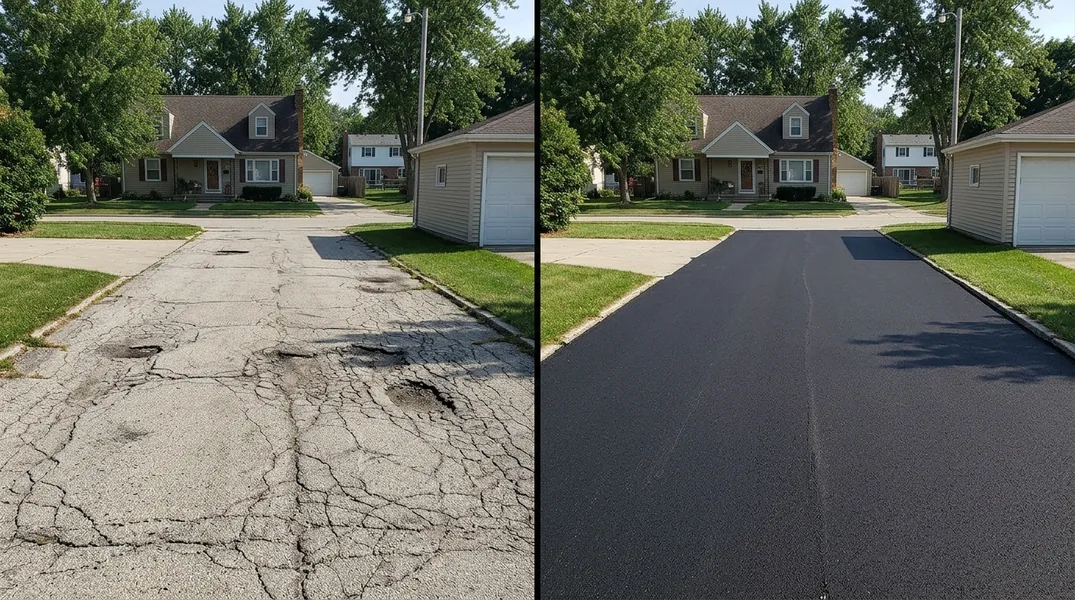
Understanding Drainage Issues in Post-War Neighborhoods
The post-war suburban boom that shaped Wauwatosa and West Allis created wonderful communities, but it also left behind a drainage legacy that many homeowners still contend with today. Homes built in the 1940s and 1950s were often constructed on modest lots with minimal grading considerations. Over the decades, soil has settled, landscapes have shifted, and many original driveways have deteriorated to the point where water management has become a serious concern.
When you're planning a new driveway surface in these established neighborhoods, understanding your property's natural drainage patterns is essential. Water that pools on your asphalt doesn't just create an unsightly appearance; it accelerates pavement degradation, seeps into the subbase, and can eventually undermine the entire structure. This is especially true in Milwaukee and surrounding areas, where freeze-thaw cycles are intense and moisture penetration leads to rapid cracking and pothole formation.
Why Water Pooling on Driveways Is a Real Problem
Water pooling on your driveway isn't just a cosmetic nuisance. Standing water creates a cascade of problems that can shorten your pavement's lifespan dramatically. When water sits on asphalt, it seeps through micro-cracks and into the base layers below. During winter months, that trapped moisture freezes and expands, pushing upward and creating the heaving and cracking you see in spring. In Wauwatosa and West Allis, where winters are particularly harsh, this freeze-thaw cycle is relentless.
Beyond structural damage, pooled water can also damage your home's foundation if it's allowed to collect near the foundation line. It creates breeding grounds for algae and moss, making your driveway slippery and unsafe. Most importantly, poor drainage forces you into costly Driveway Repair cycles much sooner than necessary. A new driveway surface that doesn't properly manage water is essentially an investment that will fail prematurely. This is why drainage must be a primary consideration when you're planning Asphalt Driveway Paving & Installation in older neighborhoods.
Driveway Drainage Solutions: French Drains and Trench Systems
Modern driveway drainage solutions have evolved significantly, and today's homeowners have several effective options to prevent water pooling. A driveway french drain is one of the most popular and cost-effective solutions for managing surface water. This system uses a perforated pipe installed below or alongside your driveway, surrounded by gravel, to intercept water before it can pool on the surface. The water is then directed away from your property toward a storm drain, dry well, or lower-lying area where it can safely disperse.
A trench drain driveway system works similarly but is installed as a linear channel, typically at the edge or center of your driveway. This type of system is particularly effective if your driveway sits in a low spot or if water naturally flows across it from a higher elevation. Trench drains are visible but functional, and they can be finished with grates that complement your landscape. For homeowners in post-war neighborhoods where grading is irregular, a combination approach often works best. Your driveway contractor can assess your specific situation, evaluate how water currently moves across your property, and recommend the most appropriate driveway drainage solutions for your needs.
The key advantage of installing these systems during new Asphalt Driveway Paving & Installation is that they're far more affordable and easier to implement than retrofitting them later. Once your new asphalt is in place, adding drainage becomes significantly more expensive and disruptive. This is why professional contractors in Milwaukee always recommend planning drainage during the initial design phase.
Proper Grading and Slope: The Foundation of Good Drainage
Even before you consider french drains or trench systems, the slope and grading of your driveway surface itself is critical. A properly graded driveway should slope away from your home and adjacent structures at a rate of approximately one-eighth inch per foot. This gentle slope is barely noticeable to the eye but highly effective at moving water off the surface quickly. In post-war neighborhoods where original grading may have settled or been compromised, re-establishing proper slope during new asphalt installation is essential.
Your contractor should also evaluate the surrounding landscape and hardscaping. If your driveway is flanked by flower beds, patios, or landscape features that are higher than the driveway surface, water will naturally flow onto your asphalt. Addressing these elevation differences during your paving project prevents future pooling problems. Many homeowners in Wauwatosa and West Allis discover that their drainage issues stem from simple grading oversights that could have been corrected during the initial installation.
Asphalt Driveway Paving & Installation Cost in Milwaukee: What to Budget for Drainage
Adding proper drainage to your new driveway does increase the overall project cost, but it's an investment that pays for itself through extended pavement life and reduced maintenance. A basic Asphalt Driveway Paving & Installation project in the Milwaukee area typically ranges based on your driveway's size and condition, but adding a french drain or trench drain system usually adds 15 to 30 percent to the total project cost, depending on complexity. For a standard two-car driveway, this might mean an additional $1,500 to $3,500 for comprehensive drainage solutions.
The good news is that this additional investment typically extends your driveway's lifespan by 10 to 15 years compared to a driveway without proper drainage. When you consider that you might otherwise face Pothole Repair & Asphalt Patching every few years or even Asphalt Resurfacing & Overlay within 10 to 12 years, the drainage investment becomes economically sensible. To understand the specific pricing for your property and drainage needs, contact Milwaukee Asphalt Paving at (414) 982-3074 for a detailed consultation and free estimate.
Getting Professional Help: Asphalt Driveway Paving & Installation Near Me
If you're a homeowner in Wauwatosa, West Allis, or surrounding areas planning a new driveway, partnering with an experienced local contractor is invaluable. A professional team understands the specific drainage challenges of post-war neighborhoods, the local soil conditions, and how Milwaukee's climate impacts your driveway's longevity. They can assess your property's unique situation and recommend drainage solutions tailored to your needs rather than applying a one-size-fits-all approach.
Milwaukee Asphalt Paving has served homeowners throughout the region for years, helping them understand not just what their driveways need, but why those needs matter. Whether you're dealing with an aging driveway that's failed due to poor drainage or you're planning a new installation with drainage built in from the start, the team can guide you through the entire process. Reach out today at (414) 982-3074 or visit our website to schedule your free estimate and learn exactly what your driveway needs to thrive for decades to come.
Looking for a professional asphalt paving contractor in Milwaukee? Milwaukee Asphalt Paving responds fast for all your asphalt paving needs.
Get a Free Quote